Sign up now and get 20% off your order. See sign up below.
Sign up now and get 20% off your order. See sign up below.
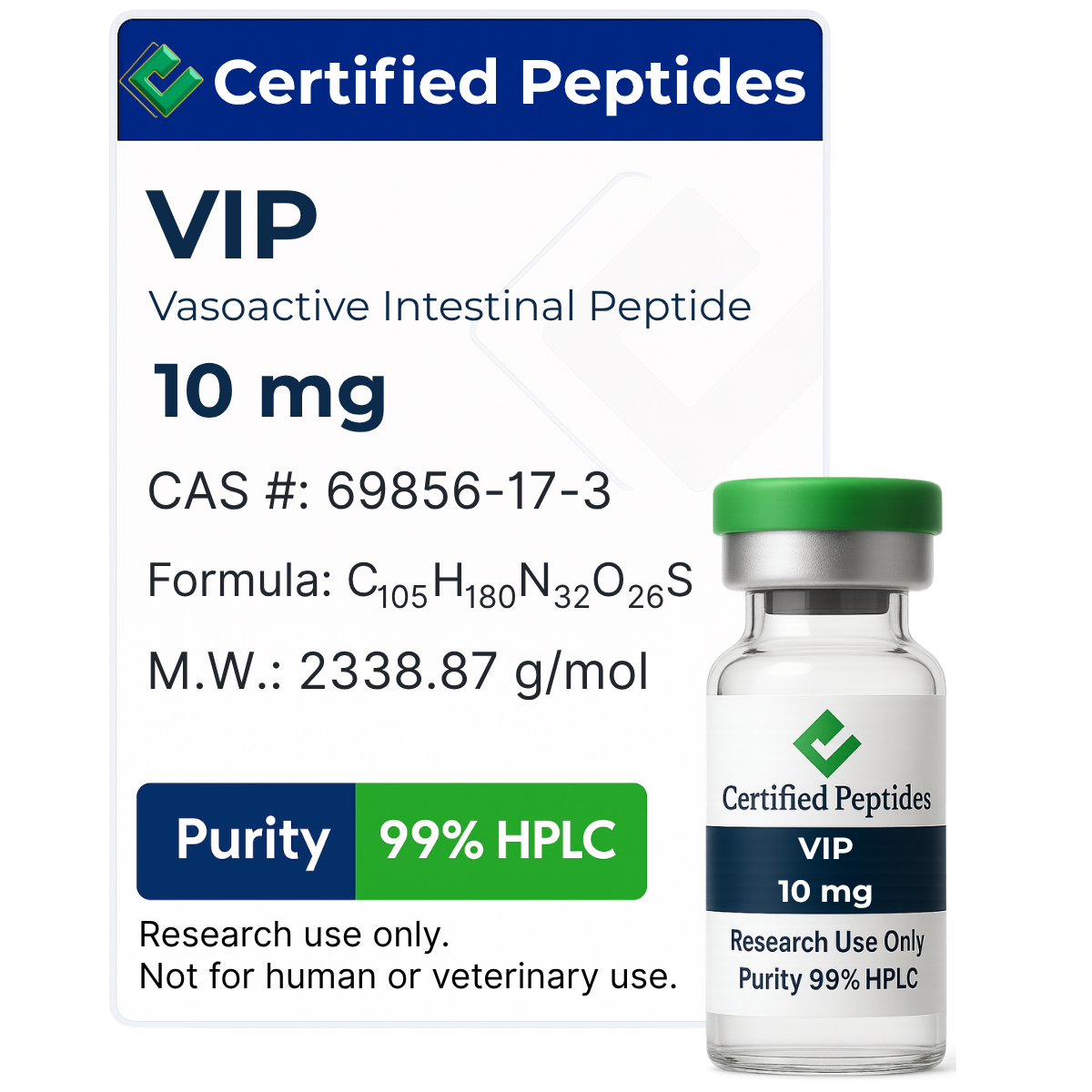
Vasoactive Intestinal Peptide (VIP) is an endogenous 28–amino-acid neuropeptide widely distributed throughout the gastrointestinal tract, pancreas, lungs, cardiovascular system, and central nervous system. In research settings, VIP is recognized for its broad regulatory functions, including smooth-muscle relaxation, modulation of inflammatory signaling pathways, vasodilation, bronchodilation, and neuroprotection.
At the molecular level, VIP exerts its biological activity primarily through VPAC1 and VPAC2 receptors, which are highly expressed in pulmonary tissue as well as in various immune and neuronal cell populations. Engagement of these receptors influences cyclic AMP pathways, cytokine expression, vascular tone, and neuronal survival, making VIP a molecule of interest across multiple experimental domains.
VIP has been widely investigated in preclinical and translational research for its potential roles in:
The products on this website are for legitimate research use only. They are not intended to prevent, treat, or cure any illness or disease and are not intended for human consumption. By accessing this site, you acknowledge that you are at least 18 years of age, understand these terms, and have a legitmate research basis for buying these products.