Sign up now and get 20% off your order. See sign up below.
Sign up now and get 20% off your order. See sign up below.
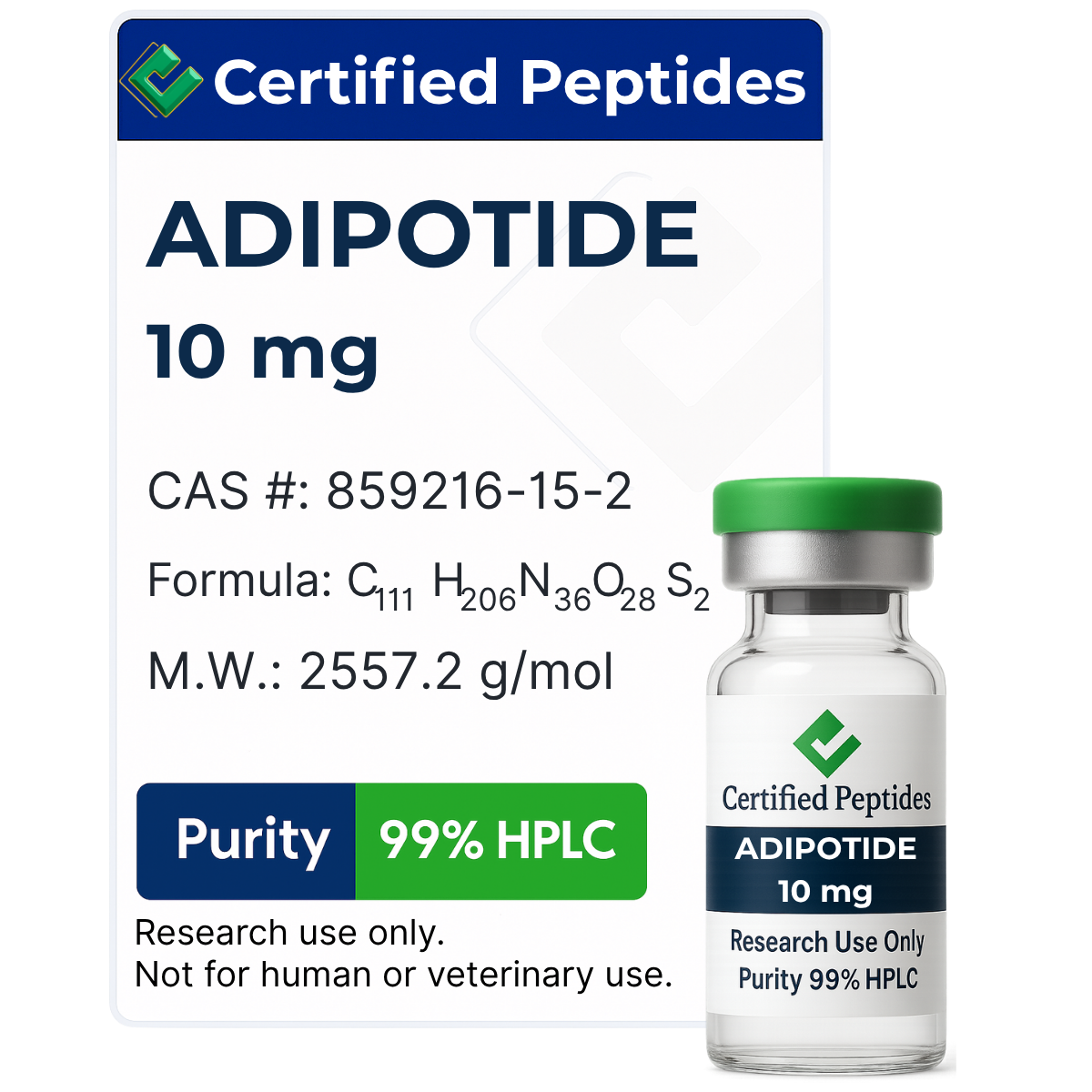
Adipotide is a vascular-targeting research peptide designed to selectively induce apoptosis within the microvasculature of white adipose tissue. By disrupting blood flow to adipocytes, the compound facilitates a programmed reduction of adipose mass through nutrient deprivation at the cellular level. Its mechanism of action is non-hormonal, distinguishing it from incretin-based agents such as GLP-1, GIP, or dual/triple agonists. Unlike those pathways, Adipotide does not rely on appetite modulation and therefore does not exhibit the characteristic gastrointestinal or centrally mediated side effects commonly associated with incretin mimetics.
Preclinical data indicate that Adipotide can promote a measurable reduction in both visceral and subcutaneous adipose tissue, with a comparatively stronger effect on visceral fat due to its higher vascular density and therefore greater susceptibility to targeted vascular apoptosis.
In research models, Adipotide has also been associated with several metabolic and cellular-level findings, including:
The products on this website are for legitimate research use only. They are not intended to prevent, treat, or cure any illness or disease and are not intended for human consumption. By accessing this site, you acknowledge that you are at least 18 years of age, understand these terms, and have a legitmate research basis for buying these products.