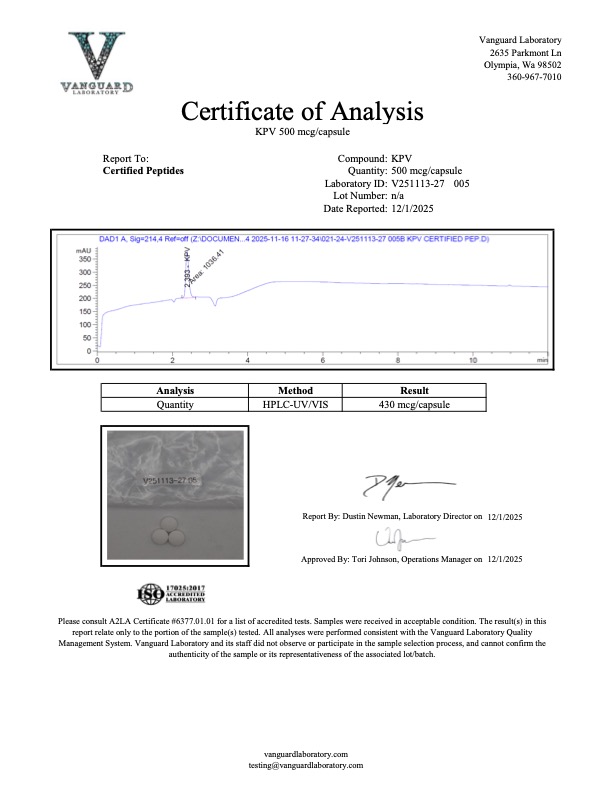
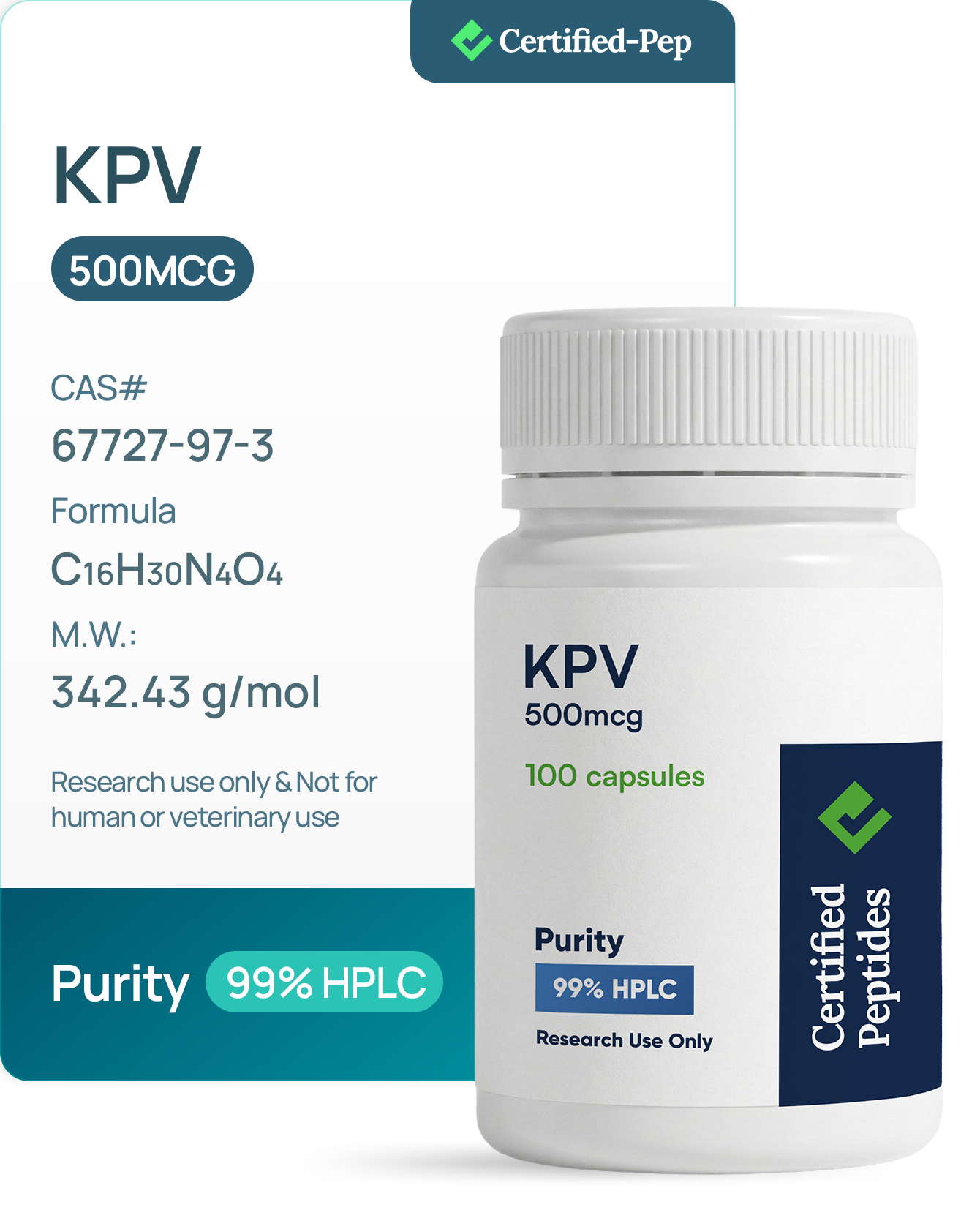
KPV is a tripeptide fragment derived from the C-terminal region of alpha-melanocyte–stimulating hormone (α-MSH), a naturally occurring peptide involved in immunomodulation and inflammatory regulation. In research settings, KPV is recognized for its targeted anti-inflammatory activity and its ability to influence cytokine expression, epithelial barrier integrity, and innate immune responses.
KPV exerts many of its observed effects through modulation of the melanocortin system, particularly MC1R-related pathways, which play a role in inflammatory suppression and tissue homeostasis. Its small molecular size allows it to interact with epithelial surfaces and immune mediators with high efficiency, making it a frequent subject of investigation in gastrointestinal, dermatologic, and systemic inflammatory research.
Research interest in KPV has focused on several key domains, including:
- Inflammatory signaling, with documented reductions in pro-inflammatory cytokines such as TNF-α, IL-6, and IL-1β
- Gastrointestinal and mucosal studies, including models of colitis, intestinal permeability, and epithelial barrier repair
- Immune modulation, particularly in contexts of chronic low-grade inflammation and innate immune dysregulation
- Dermatologic and wound-healing applications, where KPV has been studied for effects on local inflammation and epithelial regeneration
- Systemic inflammation models, with observations of reduced inflammatory cascades and improved tissue resilience
- Because of its highly selective anti-inflammatory profile and non-hormonal mechanism of action, KPV is often evaluated as a complementary research peptide alongside agents involved in gut health, immune regulation, or epithelial repair