Description
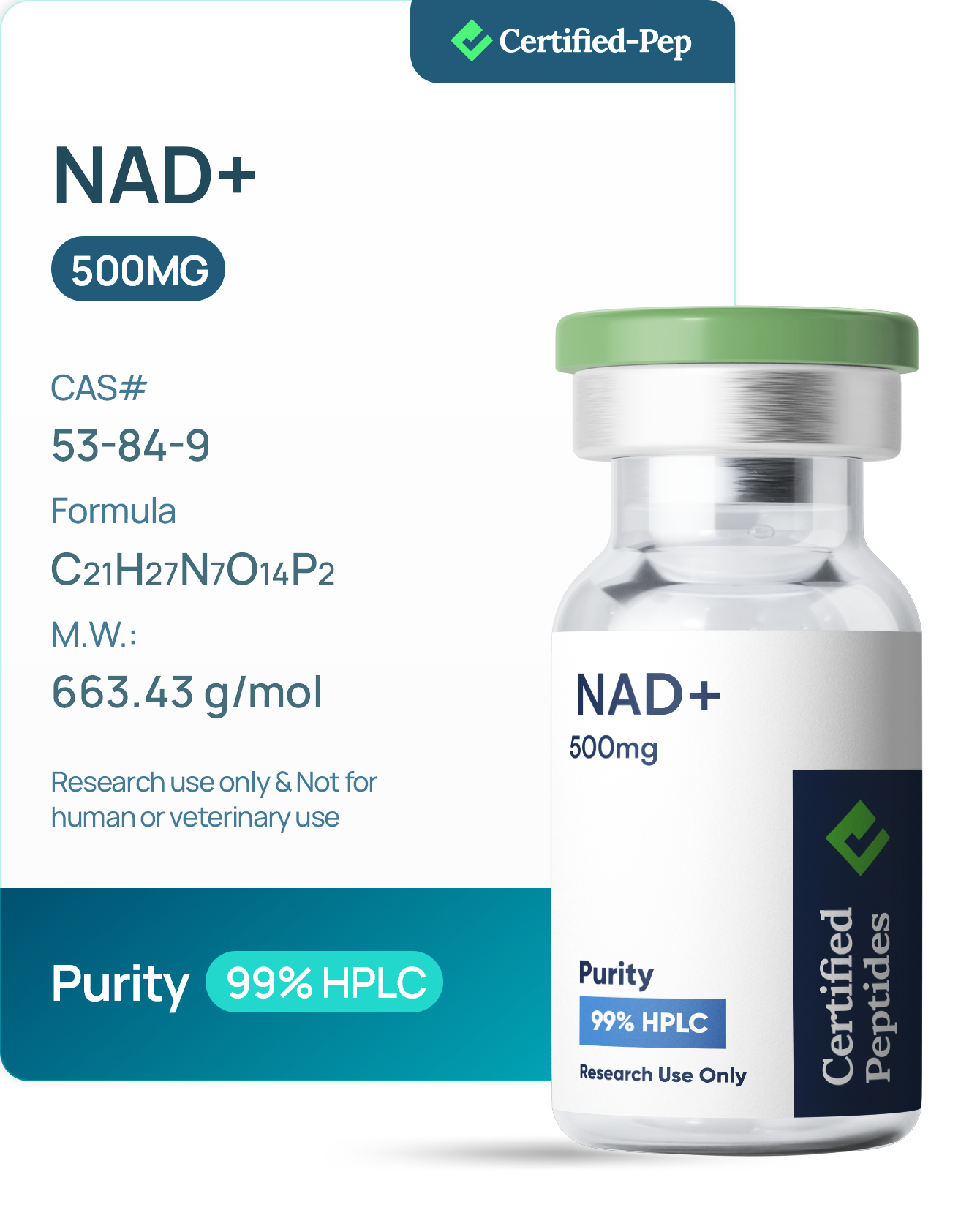
| NAD+ 500mg | |
|---|---|
| SKU | CP_NAD_PLUS_500MG_10ML_VIAL |
| CATEGORY | Research Compound |
| CAS | 53-84-9 |
| VIAL SIZE | 10 mL |
| FORM | LYOPHILIZED POWDER |
| MOLECULAR WEIGHT | 663.43 g/mol |
| COMPOSITION | Dinucleotide Coenzyme |
| MOLECULAR FORMULA | C21H27N7O14P2 |
| ITEM ID | 149 |
NAD+ 500mg provides Nicotinamide adenine dinucleotide (oxidized, NAD+) as lyophilized powder in a 10 mL vial.
Biochemical Context
NAD+ functions as an electron carrier in oxidation-reduction reactions and serves as a co-substrate for enzymes including sirtuins, poly(ADP-ribose) polymerases (PARPs), and CD38/CD157 ectoenzymes. Its interconversion with NADH is central to glycolysis, the citric acid cycle, and oxidative phosphorylation. NAD+ is also a precursor to NADP+ via NAD kinase activity.
Selected Nonclinical Research
NAD+ Salvage Pathway and Ferroptosis Markers in Cardiac Cell Models
Wang et al. (2026) investigated the role of nicotinamide phosphoribosyltransferase (NAMPT), the rate-limiting enzyme of the NAD+ salvage pathway, in rat cardiomyocyte (H9C2) hypoxia/reoxygenation models and a rat ischemia/reperfusion model. Pharmacological modulation of NAMPT activity altered NAD+/NADH and NADP+/NADPH ratios, reactive oxygen species accumulation, lipid peroxidation markers, and mitochondrial membrane potential measurements. The study characterized a downstream axis involving ferroptosis suppressor protein 1 (FSP1) and coenzyme Q10 as mediators of the observed redox changes [42735786].
NAD+ Precursor Delivery in a Murine Uterine Model
Zhou et al. (2026) described a nanoplatform-based delivery of nicotinamide mononucleotide (NMN, an NAD+ precursor) in a murine intrauterine adhesion model. The investigators reported changes in mitochondrial membrane potential, NAD+/NADH ratio, and ATP output in epithelial cells isolated from treated tissue. Transcriptomic profiling indicated shifts in gene-expression signatures associated with inflammatory and fibrotic pathways [42747012].
NAD+ 500mg for research: the coenzyme behind cellular processes
Nicotinamide adenine dinucleotide (NAD+) is a coenzyme found in every living cell. It plays a central role in energy metabolism, DNA repair and many key cellular functions and other cellular processes. It is also a substrate for hundreds of enzymes [1]. When you buy NAD+ 500mg from Certified Peptides, you get the oxidized form as a lyophilized powder in a 10 mL vial for laboratory research. It also comes in buffered formats: Buffered NAD+ 500mg and Buffered NAD+ 1000mg.
NAD metabolism: how cells make, use and recycle NAD+
NAD exists in two forms, NAD+ and NADH, and cells swap between them constantly. That swap carries electrons through metabolic pathways and keeps redox balance in check. Cells build NAD+ from food-derived vitamin B3 forms and from tryptophan, but most of it comes from recycling. The salvage pathway turns nicotinamide back into NAD+ through nicotinamide mononucleotide (NMN), and nicotinamide riboside (NR) feeds into the same route. NAMPT, the enzyme in the Wang et al. (2026) study above, sets the pace of that recycling. Because so many metabolic processes run on NAD+, it is a standard readout in cell metabolism studies. The molecular mechanisms behind its decline are an active research question.
Mitochondrial function and energy production
In mitochondria, NADH hands electrons to complex I of the electron transport chain. That flow drives ATP synthesis, the cell’s usable energy, so energy production and cellular energy metabolism depend on a steady NAD+/NADH supply [1]. Gomes et al. (2013) found that falling NAD+ in aging mouse muscle disrupted communication between the nucleus and mitochondria. In aged mice, one week of NMN restored markers of mitochondrial function toward the levels seen in young animals [3].
DNA repair, sirtuins and cell function
NAD+ isn’t only an electron carrier. At the cellular level, PARP enzymes burn NAD+ to flag and fix DNA breaks. Sirtuins use it to switch genes involved in stress responses and cellular repair [2]. Because these enzymes compete for the same pool, heavy DNA damage can drain NAD+ needed elsewhere, which links DNA repair to cell function and cellular health.
NAD levels and cellular aging
NAD levels fall with age in many tissues. Massudi et al. (2012) measured lower NAD+ in skin samples from older adults than from younger ones [4]. In mice, Camacho-Pereira et al. (2016) showed that CD38, an NAD-consuming enzyme, is higher in older mice and drives much of the decline. Mice lacking CD38 kept NAD+ and mitochondrial function [5]. These findings sit behind the growing interest in NAD+ and cellular aging, and in age related decline in general.
Metabolic health in animal models
Most metabolic data come from mice given precursors, not NAD+ itself. Yoshino et al. (2011) found that NMN improved glucose tolerance and insulin sensitivity in mice with diet- or age-induced diabetes [6]. Mills et al. (2016) gave mice NMN for 12 months and saw milder age related weight gain, better energy metabolism and better insulin sensitivity than in untreated mice. In that study, a single dose raised tissue NAD+ within minutes [7]. That body of work is why researchers study NAD+ in metabolic disease, insulin resistance and other metabolic disorders. Whether it can improve metabolic health in humans hasn’t been settled.
Cognitive function and mental clarity: mouse data only
Hou et al. (2018) gave NR to mice carrying Alzheimer’s-type mutations plus a DNA repair defect. Treated mice showed less neuroinflammation and DNA damage and did better on learning and memory tests, the standard mouse measures of cognitive function [8]. That is mouse data on cognitive decline. Claims about mental clarity in people come from marketing, not from published trials.
Immune cell function and CD38
Immune cells play a key role in NAD levels too. Covarrubias et al. (2020) found that senescent cells push macrophages to express CD38, which breaks down NAD+ in surrounding tissue [9]. That connects immune cell function and the immune system to age related NAD+ loss. NAD+ also follows the circadian rhythm: the clock proteins CLOCK and SIRT1 control NAMPT, so NAD+ levels rise and fall over the day [10].
Common side effects, IV infusions and compounded products
Search results about common side effects describe IV infusions and compounded products given to people. Those are separate products made and administered under a prescription, and this page doesn’t cover them. NAD+ injections are not FDA approved for any indication. In 2025 the FDA classified a recall of NAD+ injection vials from one manufacturer as Class I over elevated endotoxin levels [11]. That is why every Certified Peptides batch is screened for endotoxins.
What is still unknown
Oral supplements and oral forms of NAD+ are largely broken down in the digestive system. Most human work uses oral precursors such as NR and NMN. Small human trials have tracked markers like blood pressure, including in people with high blood pressure, with mixed findings [12]. More studies are needed before the mouse results can be read as evidence for human health. NAD+ metabolism also matters in cancer research, since many tumor cells lean on the salvage pathway, which is one more open safety question. The science on age related diseases is early, and further support has to come from controlled trials.
Quality testing and storage
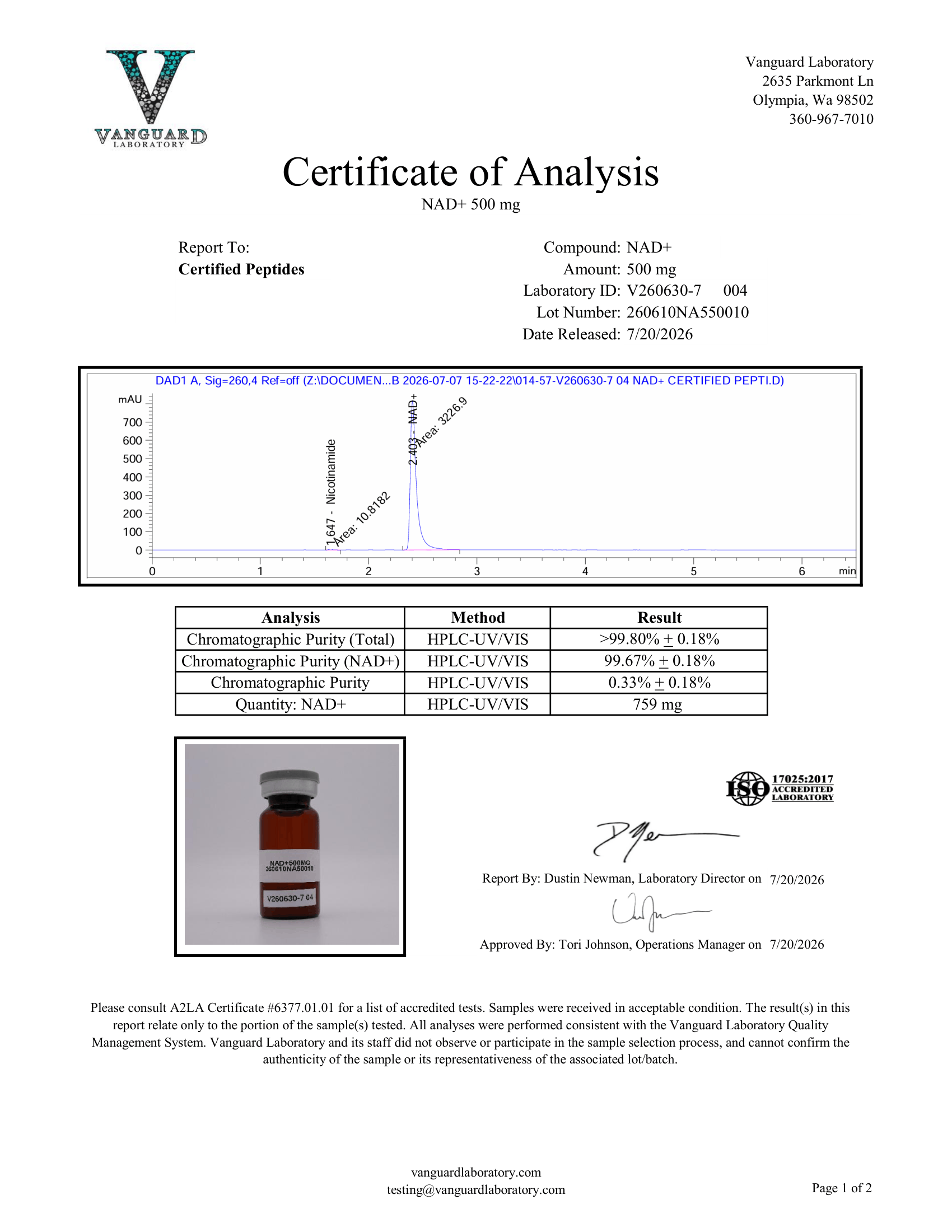
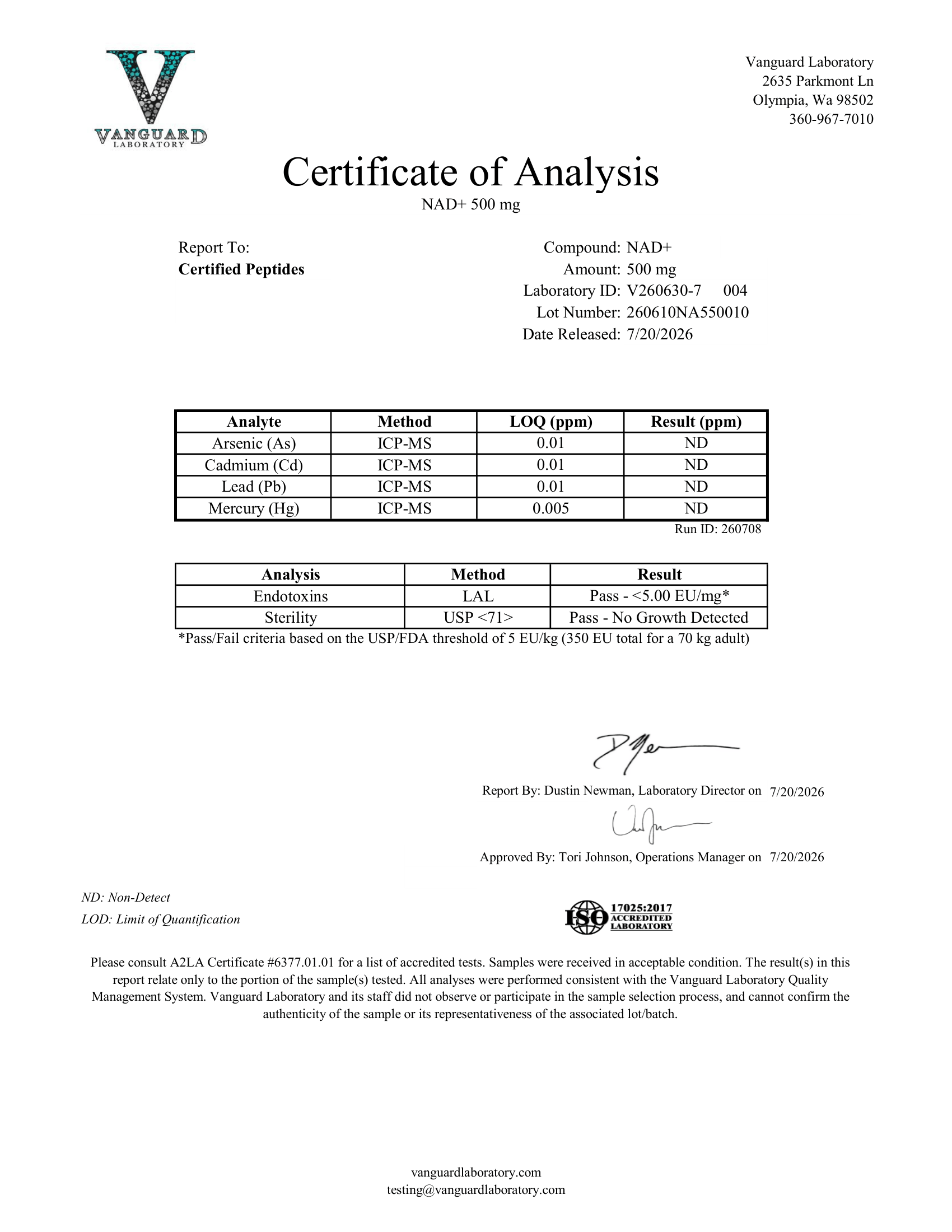
Certified Peptides manufactures in a cGMP facility in Texas. Every batch is tested by an ISO/IEC 17025 accredited US lab for purity (HPLC), quantity, identity (LC-MS), endotoxins, heavy metals and sterility. Match the lot number on your vial to its report in the COA Library, and see Lab Testing for the full panel. Keep vials sealed, cold and protected from light.
Related research compounds include 5-Amino-1MQ, an NNMT inhibitor studied for its effect on the NAD+ salvage pathway, MITO BLEND 120MG, which contains NAD+, and Glutathione 1500MG.
Questions researchers ask
What is the difference between NAD+ and NADH? N
AD+ is the oxidized form that accepts electrons. NADH is the reduced form that carries them to the electron transport chain. This vial contains NAD+.
Is NAD+ a peptide?
No. It is a dinucleotide coenzyme (C21H27N7O14P2, 663.43 g/mol), sold alongside peptides as a research compound.
Does this page cover treatment in people?
No. The focus here is cellular metabolism and animal models. Read Research Purposes Only? and our FAQ.
Disclaimer
For laboratory research use only. Not for human or veterinary use. Not for consumption. This product is not a drug, food or cosmetic. Information on this page is for educational purposes, has not been evaluated by the FDA, and is not intended to diagnose, treat, cure or prevent any disease.
References
- Covarrubias AJ, Perrone R, Grozio A, Verdin E. “NAD+ metabolism and its roles in cellular processes during ageing.” Nat Rev Mol Cell Biol. 2021;22(2):119-141. doi:10.1038/s41580-020-00313-x
- Verdin E. “NAD+ in aging, metabolism, and neurodegeneration.” Science. 2015;350(6265):1208-1213. doi:10.1126/science.aac4854
- Gomes AP et al. “Declining NAD+ induces a pseudohypoxic state disrupting nuclear-mitochondrial communication during aging.” Cell. 2013;155(7):1624-1638. PubMed 24360282
- Massudi H et al. “Age-associated changes in oxidative stress and NAD+ metabolism in human tissue.” PLoS One. 2012;7(7):e42357. PubMed 22848760
- Camacho-Pereira J et al. “CD38 dictates age-related NAD decline and mitochondrial dysfunction through an SIRT3-dependent mechanism.” Cell Metab. 2016;23(6):1127-1139. PMC4911708
- Yoshino J, Mills KF, Yoon MJ, Imai S. “Nicotinamide mononucleotide, a key NAD+ intermediate, treats the pathophysiology of diet- and age-induced diabetes in mice.” Cell Metab. 2011;14(4):528-536. PMC3204926
- Mills KF et al. “Long-Term Administration of Nicotinamide Mononucleotide Mitigates Age-Associated Physiological Decline in Mice.” Cell Metab. 2016;24(6):795-806. PubMed 28068222
- Hou Y et al. “NAD+ supplementation normalizes key Alzheimer’s features and DNA repair in transgenic mice with DNA repair deficiency.” Proc Natl Acad Sci USA. 2018;115(8):E1876-E1885.
- Covarrubias AJ et al. “Senescent cells promote tissue NAD+ decline during ageing via the activation of CD38+ macrophages.” Nat Metab. 2020;2(11):1265-1283.
- Nakahata Y et al. “Circadian control of the NAD+ salvage pathway by CLOCK-SIRT1.” Science. 2009;324(5927):654-657.
- FDA Class I recall of NAD+ injection over elevated endotoxin levels, classified October 21, 2025. HMP Global summary
- Martens CR et al. “Chronic nicotinamide riboside supplementation is well-tolerated and elevates NAD+ in healthy middle-aged and older adults.” Nat Commun. 2018;9:1286. doi:10.1038/s41467-018-03421-7
- Wang et al. (2026). NAMPT, the NAD+ salvage pathway and ferroptosis markers in H9C2 cardiomyocyte and rat ischemia/reperfusion models. PMID: 42735786
- Zhou et al. (2026). Nanoplatform delivery of NMN in a murine intrauterine adhesion model. PMID: 42747012
Tags: NAD, cellular energy metabolism, cellular metabolism, energy metabolism, immune cell function, key cellular functions, dna repair
NAD Research Facts
NAD+ levels decline by about 50% from ages 20 to 50.
Low NAD+ levels are linked to fatigue and neurodegenerative disorders.
NAD+ levels can decline by about 50% from ages 20 to 50.
Common side effects of NAD+ injections include nausea and flushing.
NAD+ injections may theoretically accelerate tumor growth in cancer patients.
Quality of compounded NAD+ products can vary significantly between providers.
NAD+ levels can be supported by lifestyle changes like regular exercise and a balanced diet.
NAD+ injections bypass the digestive system for better absorption.